The phrase declutter your home can sound like a punishment involving clear bins, a donation marathon, and a photo of a nearly empty room. I prefer a more useful approach: make the things you own easier to see, reach, wear, and enjoy. As a former J.Crew designer, I start with proportion and function. A closet stuffed with beautiful pieces is still difficult if the morning outfit is buried under six sweaters that no longer fit your life. Every piece earns its hanger, and every object should earn its shelf, drawer, or countertop.
Start with the friction, not the fantasy
Before you declutter your home, notice where your day gets snagged. Is the entryway covered in shoes because the shoe rack is too small? Are clean clothes living in a chair because your dresser drawers are packed? Does the kitchen counter collect mail because there is no obvious landing spot? These are design problems, not personal failures.
Choose one irritating zone and empty only that zone. For a bedroom chair, make three groups: clothes worn regularly, clothes needing repair or laundering, and clothes that have become expensive guilt. The third group is where most closets go wrong. A $180 blazer that pinches at the shoulders is not a bargain simply because you bought it on sale. Put it in a separate review pile and keep moving.
Set a 25-minute timer. That is long enough to create visible change and short enough to avoid pulling every drawer into the hallway. Take a quick photograph before you begin. The after picture will show whether your system improved, rather than merely proving that you worked hard.
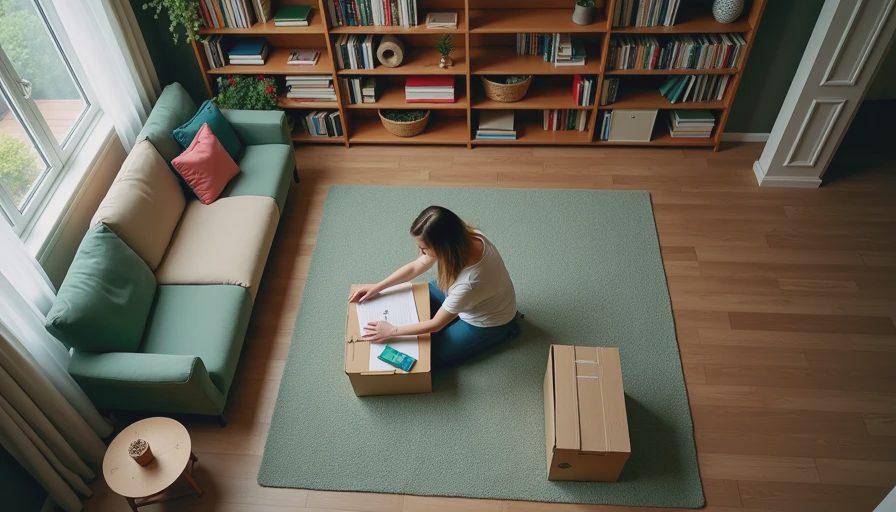
Edit your closet by real life
The fastest way to declutter your home is often to edit the clothes taking up the most visual and physical space. Start with the week you actually live, not the imaginary version involving frequent cocktail parties and a mysteriously clean car. Pull out what you wear for school drop-off, client meetings, errands, travel, and dinner. Notice the repeat patterns.
If you reach for a navy merino crewneck from Uniqlo every Tuesday, that is useful information. If a polyester blouse from Zara has stayed untouched because it wrinkles in the car and feels scratchy under a jacket, stop treating it like a future solution. Fabric, care, and fit matter more than the fantasy attached to a purchase.
Keep a practical core together: two or three trousers, a dependable jean, washable knitwear, a jacket that works with both, and shoes you can walk in. A $98 cotton cardigan that survives weekly washing can serve you better than a $260 novelty knit that requires delicate handling. Do not force a number such as 30 or 37 items. The right size is the smallest wardrobe that supports your actual calendar.
For uncertain pieces, use a 30-day test. Hang them with the hook facing backward. Turn the hook around only when you wear the item. At the end of the month, review what remains untouched. This method removes memory and wishful thinking from the edit.
Make storage follow your habits
When you declutter your home, storage should reflect how you behave, not how a catalog says you should behave. If you drop denim on a bench every evening, place an open basket there instead of demanding that tired-you fold jeans perfectly. If bags pile beside the front door, install sturdy hooks at shoulder height. A system that requires five steps will fail by Wednesday.
Use matching hangers where they improve visibility, not because every closet needs a showroom finish. Slim velvet hangers can add space, but they are not ideal for heavy leather jackets or slippery silk camisoles. I like broad wood hangers for tailored jackets, simple slim hangers for shirts, and a small divider for belts and scarves. Leave a little air between categories so you can see the line of a sleeve.
In the bedroom, place everyday pieces between waist and eye level. Store formalwear, spare bedding, and sentimental garments higher or farther back. A clear label such as “winter layers” beats a vague box labeled “miscellaneous.” If you cannot identify a container without opening it, the label is doing a poor job.
Use the four-question decision test
A useful decluttering decision should be specific. Ask four questions: Do I use it? Does it fit my current life? Is it in good enough condition to use now? Would I choose it again at today’s price? You do not need a dramatic emotional ceremony for each object. A cracked plastic hanger, duplicate measuring cup, or stretched-out T-shirt can leave quickly.
Clothes deserve a fit-based conversation rather than a size-based one. A garment can be the correct number on the tag and still have the wrong shoulder width, rise, sleeve arc, or fabric recovery. Keep the piece if you like how it functions on your body today. Do not keep it as a promise about a future body or future occasion.
For sentimental items, create a container with a physical limit. My own old J.Crew swatches live in one shallow box; when it is full, I have to edit. That boundary lets memories stay without allowing them to colonize every drawer. Photograph a meaningful concert shirt or baby outfit before passing it along if the image preserves the story better than the object does.

Finish the kitchen and living room without emptying them
The kitchen usually needs categories, not fewer possessions at any cost. Gather duplicates: spatulas, travel mugs, water bottles, food-storage lids, and promotional tote bags. Keep the version that works best and is easiest to clean. A $12 glass container with a secure lid can outperform a matched set if it stacks neatly and does not stain.
In the living room, clear surfaces first. Keep one lamp, one useful tray, and a few objects you genuinely enjoy. The tray is practical: remote controls, reading glasses, and a charger have a home instead of spreading across the coffee table. Books can remain visible, but sort them by where you reach for them. Design books beside the chair are more useful than design books trapped in a bookcase behind a plant.
Create a small outgoing station near the exit. Use one sturdy shopping bag for donations, a box for returns, and a folder for papers that need action. Take donations out weekly rather than allowing the bag to become another permanent household object. If you are selling something, give it a listing deadline. After that date, choose a simpler exit route.
Keep your home edited with a monthly reset
To declutter your home once is helpful; to keep the result is the real design work. On the first Saturday of each month, walk through the entryway, bedroom, kitchen, and bathroom with a laundry basket. Return misplaced items, remove obvious trash, and identify one category that has expanded. Do not begin by buying organizers. Measure the problem first.
Use a one-in, one-out rule for categories that tend to multiply, such as mugs, denim, coats, and skincare. This does not mean every purchase requires guilt or a perfectly balanced ledger. It means a new pair of black ankle boots should prompt an honest look at the old pair that hurts after ten minutes.
The goal is not a sparse room that looks impressive for a weekend. It is a home where the useful things are visible and the beautiful things have room around them. Start with the drawer that annoys you, the closet you avoid, or the counter that steals five minutes every morning. When you declutter your home around your real routines, order becomes easier to maintain. Every piece earns its hanger, and every room earns its calm.




No comments yet — be the first to share a thought.