
The Dirty Secret of Sizing
You’ve probably experienced this: You try on the same style in two different sizes and one fits beautifully while the other feels completely off. Or you order online in your usual size only to find the proportions look strange.
The culprit is often pattern grading — and it’s one of the most important but least discussed aspects of garment design.
What Pattern Grading Actually Is
Pattern grading is the process of scaling a base pattern (usually a sample size, often 4 or 6) up and down to create all the other sizes.
It sounds simple in theory: just make everything bigger or smaller, right?
Wrong.
Good grading adjusts not just overall measurements but proportions, dart placement, armhole depth, shoulder slope, and countless other details for each size. Bad grading simply enlarges or reduces everything mathematically, leading to poor fit on real bodies.
What I Learned Designing at J.Crew
During my years on the design team, I saw firsthand how much work goes into proper grading for higher-quality lines.
We’d have fit models in multiple sizes. Pattern makers would adjust each grade carefully. There were countless fittings and corrections to ensure a size 16 woman got the same flattering proportions as a size 4.
Fast fashion often skips these steps. They take the sample size, apply a mathematical formula, and call it a day. The result? Larger sizes that feel boxy or restrictive in the wrong places, and smaller sizes that pull awkwardly.
Signs of Good vs Bad Pattern Grading
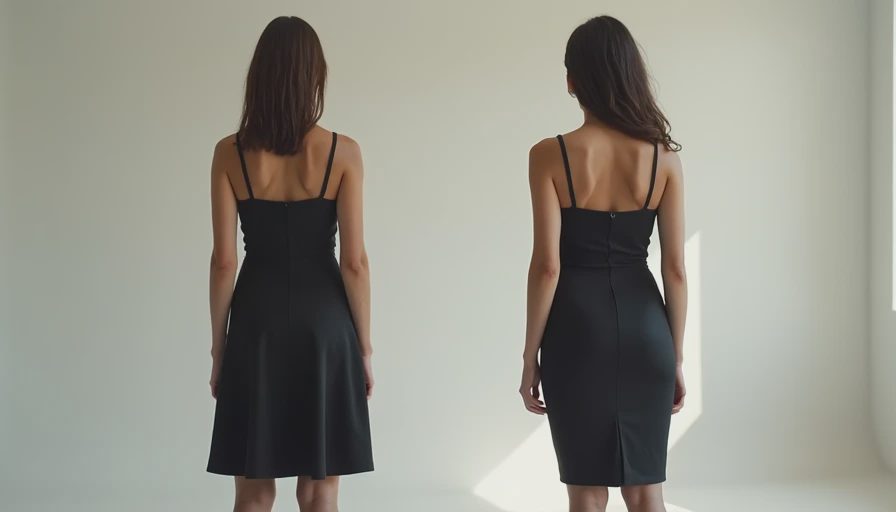
Good grading looks like:
Proportions remain balanced across sizes
Darts and shaping hit in the right places for different body types
Armholes and necklines feel comfortable
The garment moves with your body instead of against it
Shoulder seams sit properly on the shoulder
Bad grading feels like:
Everything is just wider/taller without proper adjustments
Bust darts pointing in strange directions
Tight armholes on larger sizes
Excess fabric in areas that should be shaped
Poor shoulder fit
How This Affects Real Women
I’ve worked with clients who thought they “just weren’t a dress person” because previous purchases fit poorly due to bad grading. Once they found properly graded pieces, their entire relationship with certain silhouettes changed.
The difference is dramatic. A well-graded blazer makes you look polished. A poorly graded one makes you feel frumpy no matter how expensive the fabric is.
What to Look For When Shopping
You can’t see the pattern on the rack, but you can test for good grading:
Try before you buy — obvious but important
Move in the garment — sit, reach, walk
Check key areas — shoulders, bust, armholes, waist
Compare similar styles across brands when possible
Pay attention to brands known for good fit — they usually invest in proper grading
The Cost Connection
Proper pattern grading is expensive. It requires time, multiple fit models, skilled pattern makers, and many rounds of sampling. That’s one reason quality pieces cost more.
Fast fashion cuts corners here to keep prices low and turnover high. Understanding this helps you make more informed decisions about where to spend your money.
Building a Capsule with Good Fit in Mind
When editing or building your wardrobe, prioritize pieces with good pattern grading. They become the reliable foundations that make everything else work better.
My navy blazer with proper grading is one of my most worn pieces precisely because it fits well across different layering combinations and activities.
The Takeaway
Pattern grading might be technical, but its impact on your daily dressing experience is huge.
Learning to recognize good fit — beyond just “does this go on my body” — is one of the most valuable skills for building a capsule wardrobe that truly serves you.
Every piece earns its hanger, but only if it fits properly first.
In future posts, we’ll dive deeper into construction and how to evaluate fit more effectively when shopping.


No comments yet — be the first to share a thought.