Casual outfits for women should make an ordinary Tuesday easier, not create another decision before school drop-off. After seven years designing women's wear at J.Crew, I learned that the best everyday clothes are not necessarily the newest or most expensive. They have sensible proportions, fabrics that recover after sitting, and enough structure to look intentional when you are running from a client call to the grocery store. A useful wardrobe gives you fewer pieces, but more combinations.
Start with a reliable everyday uniform
My own default is a fine-gauge cotton sweater, straight-leg jeans, and a low-profile leather sneaker. It works for taking Maya to swim practice, answering emails at a coffee shop, and driving downtown for pottery class. The formula is simple, but the details matter. Look for denim with about 1 to 2 percent elastane, a 10- to 11-inch rise, and a leg that skims rather than clings. Madewell, Gap, and Levi's all make versions in different price ranges; I would rather spend $90 on jeans with a clean waistband than $180 on a pair that twists at the side seam.
For tops, cotton-modal or merino blends usually perform better than very thin polyester jersey. A sweater between 10 and 12 gauge has enough body to sit neatly over a T-shirt without looking bulky. Uniqlo's extra-fine merino is a practical lower-cost option, while Everlane and Quince offer similar shapes at a higher price. Choose two neutrals, one denim shade, and one color you actually enjoy wearing. Navy, cream, olive, and brick are easier to combine than a closet full of disconnected impulse buys.
The point is not to dress identically every day. It is to build a starting line. When the foundation is dependable, you can change the shoes, jacket, or jewelry and get a different result without buying a complete outfit.
Use proportion instead of decoration
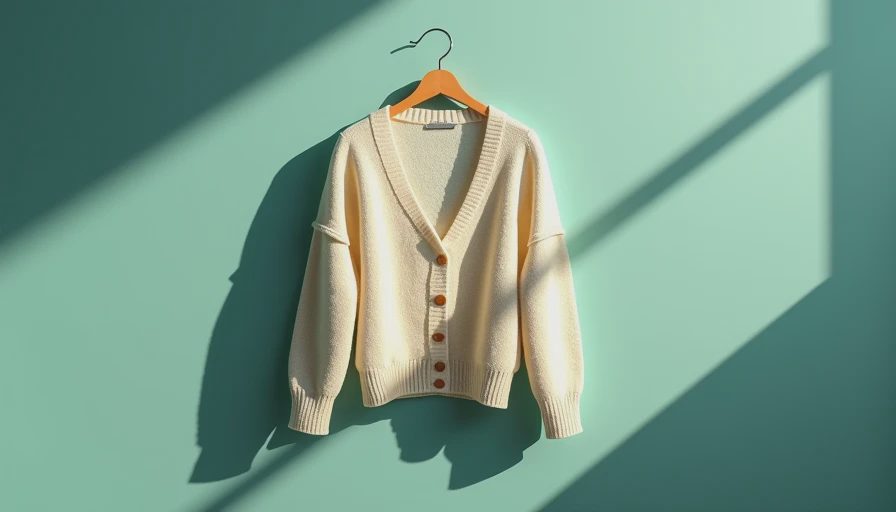
Good casual outfits for women usually have one clear proportion. If the top is boxy, the bottom can be straight or gently tapered. If the jeans are wide, try a closer-fitting knit or a shirt with a defined shoulder. This is not about making a body look smaller; it is about helping the eye understand the shape of the clothes.
I made the opposite mistake for years. I paired oversized fisherman sweaters with very wide trousers because both pieces looked beautiful on their own. Together, they made me feel buried in fabric while I was loading dishes or walking the James River trail. The fix was not a new body or a complicated styling trick. I shortened the sweater hem by two inches and chose trousers with a flatter front. The outfit immediately felt more balanced.
A cropped jacket can create a useful break at the high hip, especially over a column of jeans and a T-shirt. A longer cardigan creates a continuous vertical line and works well with slim pants or a midi skirt. Try the outfit while sitting down, bending over, and carrying a tote. Clothes are not being judged on a hanger. Their real job starts when you move.
Build around three practical layers
The most useful casual outfits for women have a layer for temperature changes. Start with a base, add a middle layer, and finish with something that handles weather or air conditioning. A white or striped cotton T-shirt is a reliable base, but inspect the neckline. Binding should lie flat, and the shoulder seam should end near the actual shoulder bone rather than sliding down the arm.
The middle layer can be a denim shirt, cotton cardigan, chore jacket, or unstructured blazer. Madewell's denim shirts tend to be soft and casual; J.Crew's schoolboy-style blazers offer more shaping but can feel too formal unless worn with sneakers. For a $60 to $120 alternative, look for a cotton-linen blend jacket with patch pockets and minimal lining. It will fold more comfortably in a car than a sharply tailored wool blazer.
The outer layer should solve a real problem. A water-resistant trench handles rain and commutes. A quilted jacket works for chilly soccer fields. A cropped utility jacket is useful over dresses and wide-leg pants because it stops at the waist instead of competing with the hem. Keep one dependable option by the door so you do not turn a five-minute departure into a wardrobe excavation.
Make shoes do the editing
Shoes decide whether an outfit reads as relaxed, polished, outdoorsy, or accidentally unfinished. White leather sneakers are versatile, but they are not the only answer. A black ballet flat or Mary Jane can make jeans and a sweater suitable for a casual office. A low suede loafer adds structure without the stiffness of a traditional dress shoe. For walking-heavy days, look at the sole and heel counter before the logo. A shoe that bends under the ball of the foot and supports the heel will outperform a beautiful pair that makes you limp by lunchtime.
For my closet, the useful rotation is a leather sneaker, a loafer, a simple ankle boot, and a sandal with an adjustable strap. Brands such as New Balance, Sam Edelman, Nisolo, and Dansko cover different price points and foot shapes, but fit is personal. The inexpensive pair you wear twice a week is earning more than the designer pair you avoid because the toe box is narrow.
Accessories should finish the outfit, not announce that you tried too hard. A medium leather tote, small hoops, a watch, and a cotton scarf can give jeans and a sweatshirt enough definition for dinner with friends. One strong detail is usually enough.

Dress casual for the actual calendar
Casual outfits for women become easier when you assign clothes to situations instead of vague style identities. For school drop-off, try straight jeans, a fine sweater, a quilted jacket, and sneakers. For a casual client meeting, switch the sneakers for loafers and add an unstructured blazer. For dinner, keep the same jeans but change into a silk-blend camisole under a cardigan, then add a small shoulder bag and earrings.
A casual dress can cover several of these moments. Look for cotton poplin, ponte, or a washable jersey with enough weight to avoid clinging. A midi length with a defined shoulder works with sneakers during the day and ankle boots at night. Boden, Quince, and Universal Standard offer practical options, while vintage shops can turn up excellent cotton shirtdresses if you inspect the underarm seams and zipper first.
Do not buy a piece because it completes one imaginary outfit. Before purchasing, name at least three occasions and three items already in your closet that can work with it. If you cannot do that in the fitting room, the item is probably asking you to buy an entire new wardrobe around it.
Check construction before you spend
Price is not a guarantee of quality, but construction leaves clues. Hold a shirt to the light and look for uneven gaps between stitches. Examine whether the pattern matches at a center front button placket. Turn a jacket inside out to inspect seam finishing and lining. On knitwear, gently stretch the fabric and see whether it returns to shape. Acrylic-heavy sweaters can feel soft in a store and develop fuzz quickly after repeated wear; a wool, cotton, or viscose blend often has better recovery.
Fit matters just as much. Sit in trousers before buying them. Raise your arms in a blouse. Walk ten steps in the shoes. If a shoulder seam pulls, a waistband rolls, or a sleeve twists, do not assume laundering will fix it. A tailor can shorten sleeves or adjust a hem for roughly $15 to $40 in many markets, but major structural problems are rarely worth rescuing.
The best casual outfits for women are not collections of perfect basics. They are clothes that survive your real schedule and still feel like you. Start with one dependable uniform, add layers with distinct jobs, and spend more attention on fabric and proportion than on novelty. Every piece earns its hanger.



No comments yet — be the first to share a thought.