If cloth cloth cloth is what brought you here, I’m going to translate it into plain shopping language. In real life, fabric is the part of the garment that does the heavy lifting. It decides whether a tee keeps its shape after school drop-off, whether a sweater pills at the elbow by November, and whether a dress feels polished enough for a client meeting without asking for a whole support system underneath it. I spent years in women’s wear, and I can tell you this: most wardrobe regret starts with the wrong fabric, not the wrong outfit idea.
Start with the label, not the hanger
When I say cloth cloth cloth in a fitting room, I’m really talking about composition. The hang tag tells you more than the styling does. A 100% cotton poplin shirt from J.Crew will behave differently from a 55% cotton, 45% rayon shirt from the rack next to it, even if they look nearly identical from three feet away. Cotton poplin tends to hold a crisp line. Rayon adds drape, but it can also lose structure faster. A blend is not automatically bad; you just want the blend to solve a problem, not create one.
Look for fabric content before color, before print, before the sales pitch. If you want a tee that survives repeated washing, a compact cotton jersey or cotton-modal blend usually beats a thin open-knit that looks great once and then stretches out at the neck. If you want trousers that hold a crease, a wool blend or a dense ponte will behave better than a slippery knit that twists on the hanger. This is the quiet part of cloth cloth cloth: the label tells you whether the piece was made to work or just to photograph well.
Use your hands, then your eyes
The old “good fabric feels thick” rule is too simple, but touch still matters. A fabric can be lightweight and still be well-made if the yarns are tightly spun and the weave is even. Hold the garment up to the light. If you can see everything through it, that might be fine for a summer shell, but it is not what you want in a white tee that should do a full day of errands without turning sheer by noon.
I also check recovery. Stretch the cuff, pinch the side seam, let it go. A decent knit springs back instead of staying wavy. That matters more than almost any slogan on the tag. In cloth cloth cloth terms, recovery is what keeps a sweater from looking tired after five wears. It is why a $48 Everlane rib tank can outperform a cheaper version that feels soft in the store but grows once it meets a washing machine.

Match the fabric to the life you actually live
Here is where style advice gets honest. A piece only earns its hanger if the cloth supports your routine. For a work-from-home day that turns into a lunch meeting, a ponte pant or a structured knit blazer makes more sense than a clingy jersey pant that wrinkles when you sit down. For school drop-off in Richmond heat, a linen-cotton blend is usually more useful than pure linen if you hate the hard crease that shows up after ten minutes in a car seat.
This is also where cloth cloth cloth gets practical. If you have a day that includes a stroller, a laptop bag, and a grocery run, you want fabrics that forgive motion. That usually means a little texture, a little weight, and not too much shine. Satin can look great at dinner, but in daylight it often announces every wrinkle. A matte cotton sateen, by contrast, can feel polished without looking precious.
Spend where the fabric earns it
Not every item needs a designer price tag, but some categories are worth more because the fabric does more work. A $68 Uniqlo cashmere sweater can be a smart buy if you wear it under a coat all winter, while a $20 synthetic sweater from a fast-fashion rack may feel fine in the store and then pill before the month is over. On the other hand, a simple cotton T-shirt from Target or Old Navy can be perfectly fine if the knit is dense and the neckline is finished well.
For midrange basics, I often think in the $40 to $120 band. J.Crew, Madewell, COS, and Quince all have misses and hits, but the better pieces usually show up in the fabric weight, seam finishing, and drape. A shirt with French seams, a clean collar stand, and a fabric that hangs straight is doing more for you than a louder print ever will. Cloth cloth cloth is not about buying expensive. It is about buying enough substance that the piece looks intentional after real wear.
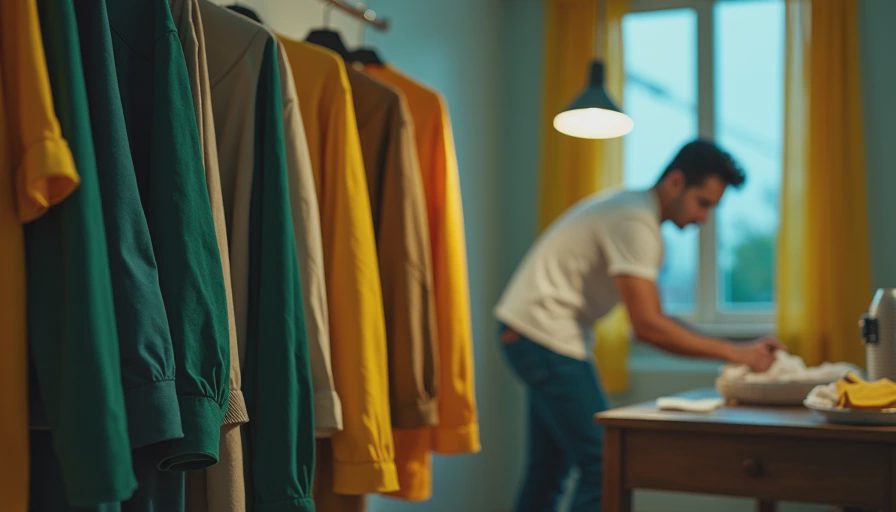
Take care of the fabric you already own
A lot of people blame a bad purchase when the real issue is care. Wash cold when the label allows it, skip the dryer for knits that stretch, and use a sweater comb before pills get deeply embedded. I learned this the hard way with a navy cotton crewneck I loved on day one and treated like a gym shirt by week three. Once the collar waved and the body thinned, it was never the same, and no amount of steaming fixed it.
For wool, cashmere, and some blends, a sweater bag and a short wash cycle matter more than fancy detergent. For cotton, avoid overloading the washer so the fibers can move. If something is worth dry cleaning, you will know fast because the structure depends on it; blazers and lined dresses often fall into that camp. Good cloth cloth cloth deserves a little respect, but not museum treatment.
Build a closet that only keeps the keepers
If you want an easier wardrobe, start asking one question before you buy: will this fabric still look deliberate after five wears and three washes? That question cuts through trend panic fast. It helps you skip the flimsy tee, the clingy sweater, and the dress that only works under perfect lighting. It also makes room for the pieces that do their job quietly, which is usually the goal.
A closet does not need more noise. It needs fabric that holds shape, wears well, and fits the life in front of you. That is the real meaning of cloth cloth cloth: not a slogan, just a reminder to shop with your hands, your calendar, and your laundry basket in mind. Every piece earns its hanger.




No comments yet — be the first to share a thought.