Every summer wardrobe starts with the same mistake: too many pieces, too little conviction. As a former J.Crew designer who now edits closets for a living, I've watched the same cotton sundresses pile up by July. The fix isn't a shopping spree. It's a small group of clothes that work together when the thermometer climbs past 90. Here's how to build a summer wardrobe that survives a picnic, a client lunch, and a sticky school pickup without blowing your budget.
Start With Two Fabrics and Let Everything Hang From There
When you design for a living, you learn that summer heat punishes the wrong fabric quickly. A 100% linen shirt from Uniqlo rings in around $39.90 and beats a blended poly that traps sweat. Cotton poplin is the other workhorse. A poplin shirtdress from Everlane runs about $98 and shrugs off wrinkles better than lawn. The fastest way to thin out your summer wardrobe is to check labels. If you see rayon or acrylic on a hot-weather garment, put it back. I live in Richmond, where July humidity does things to a T-shirt that no deodorant can fix. Hold the fabric up to your mouth and breathe through it. If air moves easily, the garment will too. That one test has saved me from buying beautiful-looking clothes that turn into saunas by lunchtime.
The Six Pieces That Carry the Season
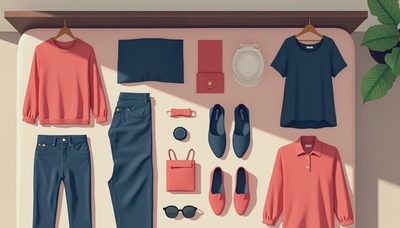
These six pieces anchor my summer wardrobe from Memorial Day to Labor Day: a crisp white poplin shirt, a pair of wide-leg linen trousers, a midi skirt with a bias cut, a cotton-knit polo, a lightweight shirtdress, and a slip skirt in navy or black. None of them scream "summer," which is why they keep working. The white shirt does double duty at a client meeting and at school pickup when you roll the sleeves and leave it untucked. A $60 Quince linen-blend trouser has the same drape as a $220 designer version because the cut, not the price tag, does the work. The Uniqlo U crew-neck T-shirt, at $19.90, is the best base layer I've found after years of testing.

The bias-cut midi skirt is the secret weapon of a summer wardrobe. A bias cut means the fabric is cut on the diagonal, so it drapes and moves instead of clinging. I bought my current navy one from Marine Layer for $88, and it's survived two vacations and an endless string of Thursday night soccer games.
What to Edit Out Before Summer Starts
Before you add anything, pull the heavy items. That cropped moto jacket, the skinny jeans you kept "just in case," and anything with a poly lining belong in storage, not in rotation. The math is simple: for every stiff pair of denim you retire, you gain space for one more linen piece that breathes. I also cut anything that needs dry cleaning in peak heat. A cotton poplin dress you can toss in the wash wins every time. If a garment can't survive a school drop-off and a park picnic in the same day, it doesn't earn its hanger.
Also check your shoes. Last year's wedges with the worn-down sole don't get a pass. Summer is rough on footwear. Keep the pairs you can walk three miles in and let the others go.

How to Shop So You Don't Repeat Last Year's Mistakes
The biggest mistake I see isn't buying too much, it's buying the same things. Women come to me with three identical black tank tops and zero pieces that cover a sunburned shoulder. Shop with a list, but also shop with your hands. Rub the fabric between your fingers and hold it up to the light. A decent summer wardrobe shouldn't pill after three washes. Name brands aren't the whole story. I've found a $30 cotton poplin top at Target that held up better than a $120 designer blouse. The difference is seam finish and thread tension, not the logo. Never buy a new summer outfit for a trip without testing it at home first. I learned that the hard way when a "packable" dress emerged from my suitcase looking like a crumpled receipt. Now I do a full dress rehearsal: wear it to the grocery store, sit in it, move around, sweat a little. If the fabric is still comfortable and the shape holds, it goes in the bag. If not, it goes back to the store.
The Exact Capsule Formula That Works for Real Life
Here's a formula I give clients who don't want to overthink it. Start with two bottoms: one wide-leg linen trouser and one bias-cut midi skirt. Add three tops: a white poplin shirt, a cotton knit polo, and a simple tank in a natural fiber. Then add one shirtdress, one cardigan in a breathable layer for cold air conditioning, and one pair of flat sandals that you've already walked 5,000 steps in. That's eight pieces. Wear them in any combination and you have more than 20 outfits — no repeating looks for a full workweek. Add a tote that fits a laptop and a swimsuit, and your summer wardrobe is done. Total cost with brands I trust? Roughly $350 to $600 depending on where you shop. The whole point of a capsule isn't a magic number. It's knowing that every piece earns its hanger.
Why This System Beats a Seasonal Haul
A seasonal haul feels satisfying in June and guilty by August. Every piece earns its hanger — that's the whole philosophy. If you want a summer wardrobe that shows up for you day after day, start with fewer, better pieces. I still do one-on-one closet edits at my Richmond studio. We'll pull out what works, donate what doesn't, and build a list for next year. You'll leave with a cooler closet and a calmer head. No body shame, no trend panic, no guilt. Just clothes that work.



No comments yet — be the first to share a thought.