The 54321 packing method is one of the few travel formulas I actually respect because it behaves like a good capsule wardrobe: disciplined, flexible, and hard to mess up. If you have ever stood over an open suitcase at 10 p.m. trying to force six outfits out of a pile of clothes you never wear at home, this is a cleaner answer. I like it because it gives you a structure without turning packing into a personality test.
The trick is not to pack fewer things just for sport. The point is to pack pieces that work together in real life, which is the same standard I use when I help women edit closets in Richmond. If a striped tee from J.Crew, a black trouser from Everlane, and a cardigan from Quince can all pull their weight at home, they can usually do the same on a trip. Every piece earns its hanger, and every piece should earn suitcase space too.
How the 54321 packing method turns a closet into a suitcase
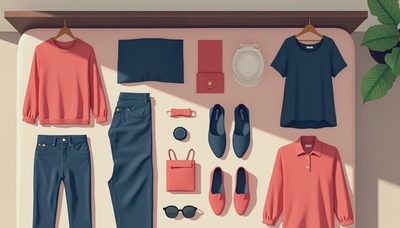
The 54321 packing method breaks your suitcase into a simple ratio: five tops, four bottoms, three layers, two pairs of shoes, and one bag. That sounds almost too tidy, but the structure is exactly why it works. Instead of packing outfits, you pack building blocks. A navy blazer, a denim jacket, and a light cardigan can each change the mood of the same black pants and white tee without adding much weight. That is the difference between a suitcase that cooperates and one that becomes a closet-shaped regret.
I would use this formula for a long weekend, a work trip, or a family visit where you need to look presentable without dragging your whole dresser along. The 54321 packing method also helps if you tend to pack for imaginary emergencies. You do not need three extra dresses because one dinner might be dressy. You need one dress that can work with a flat sandal, a low heel, or a sneaker, plus a layer that makes it feel finished. That is much easier to manage if you start with a color story, like navy, white, camel, and denim, instead of random favorites that never speak to each other.
If you want the formula to feel less rigid, think in categories rather than exact counts. A crisp button-down from Banana Republic, a knit polo from J.Crew, and a simple black tee from Uniqlo can all count as tops if they serve different jobs. The same goes for bottoms: one pair of straight-leg jeans, one pair of tailored trousers, one midi skirt, and one relaxed pant can cover more situations than five almost-identical jeans.

What I would pack first for a real trip
When I build a suitcase for myself, I start with the shoes and the layers because those are the biggest space hogs. For most trips, two shoes are enough: one that can walk all day, like Veja sneakers or a clean leather loafer, and one that dresses things up a bit, like a block heel sandal or a pointed flat from Sam Edelman. Once those are chosen, the rest gets easier because your hemlines and fabrics have a job to do.
For tops, I like a mix of one polished shirt, two easy knits, and two tees or tanks that can disappear under layers. A silk-blend cami, a ribbed cotton tank, and a cotton poplin shirt all behave differently, which matters when you are dressing for heat, air-conditioning, or a dinner reservation. That is where the 54321 packing method saves you from overthinking. You are not asking, “What am I in the mood for?” You are asking, “What will work with the black pants three times and still look fresh?”
For bottoms, I prefer fabrics that recover well after being folded. A ponte pant, a straight jean, a slip skirt, and a trouser in wool blend or polished cotton can cover almost any itinerary. If you know you will be on a red-eye or in a car for hours, skip the fabrics that crease like construction paper. Linen is lovely, but it can also look like it has had a bad day by noon.
Where people go wrong with the formula
The biggest mistake is packing five tops that all need the same bottom. That is not a system; that is a pile. Another common problem is choosing shoes that are beautiful but useless after two blocks. I have done this myself. I once packed a pair of suede heels for a work dinner in New York, and by the time I got from the hotel to the restaurant, I was already negotiating with my feet. The shoes were good-looking and completely wrong.
Another issue is forgetting that layers should actually layer. A chunky sweater, a stiff blazer, and a denim jacket can all be useful on their own, but they do not always stack well in a carry-on. I have better luck with a fine-gauge cardigan, a lightweight blazer, and a trench or utility jacket. Those pieces add polish without eating half the suitcase. The 54321 packing method works best when you respect proportion and weight, not just color.
If you travel with one bag, the goal is to make each item earn more than one outfit. A black trouser should work with sneakers for daytime and a loafer for dinner. A white tee should work under a blazer, under a cardigan, or on its own with a skirt. If you cannot name at least two ways a piece will be worn, it probably does not belong in the bag.
A smarter way to choose pieces before you zip the bag
Before I close the suitcase, I do a quick check in front of the mirror. I pull three complete outfits, not just three good-looking items, and I make sure each outfit has a different purpose. One should feel relaxed enough for coffee or errands. One should feel professional enough for a meeting or conference. One should handle dinner without looking like I tried too hard. If a piece cannot move between those lanes, it gets left behind.
This is also where price point matters. You do not need designer everything, but you do need fabrics that hold up. A $98 J.Crew tee, a $120 Everlane trouser, or a $150 Madewell jacket can be worth more than three cheaper versions that twist, pill, or lose shape in one wash. I would rather pack six good pieces than ten mediocre ones, because mediocre clothes create work. Good clothes reduce it.
The 54321 packing method is especially useful for women who want to look pulled together without owning a suitcase full of special-trip clothes. You can use what you already own, refine the mix, and stop treating travel like a costume event. If your closet already has a narrow palette and a few solid silhouettes, the suitcase nearly packs itself.
The 54321 packing method is not about deprivation. It is about editing with intention so your trip starts calmer and your outfits make sense from the first coffee stop to the last dinner. If you want packing to feel less like a panic move and more like a routine, build from the formula, test it once, and keep the pieces that prove themselves. That is how a wardrobe earns trust, at home and on the road. Every piece earns its hanger.


No comments yet — be the first to share a thought.