Learning how to create a capsule wardrobe is less about choosing an approved number of garments and more about understanding what you actually wear. A useful closet should handle Tuesday school drop-off, a client presentation, grocery runs, and dinner without requiring a floor covered in rejected outfits. I designed women’s clothing for seven years, and the most successful wardrobes were never the ones with the fewest pieces. They were the ones where every piece earned its hanger.
Start with your real week, not an imaginary lifestyle
Before buying anything, write down five situations your clothes need to cover. Mine are usually casual work, polished work, errands, exercise-adjacent weekends, and social plans. Your list might include commuting by train, walking a dog, or attending children’s activities in a chilly gym. This is the foundation for how to create a capsule wardrobe that supports your calendar instead of a fantasy version of it.
Look at what you wore during the last two weeks. Notice repeated choices, not aspirational purchases. If you reach for straight-leg jeans, a soft crewneck, and loafers, that outfit formula contains useful information. If a silk blouse has sat untouched because it wrinkles before the school bus arrives, it is not a failure of discipline. It is the wrong tool for your morning.
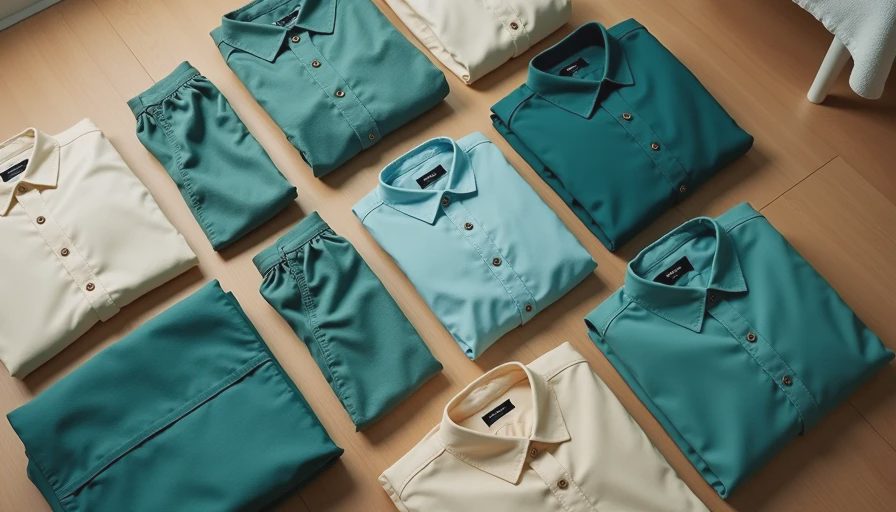
Choose a practical color structure. Two neutrals, one supporting neutral, and two accent colors are enough for most closets. Navy and cream with camel, burgundy, and blue create a different feeling from black and white with gray, olive, and rust. The point is not visual uniformity. The point is that your jacket can work with at least three tops and two bottoms without negotiation.
Audit the closet with a designer’s eye
Pull everything out and inspect each garment on a hanger, then try on the pieces that remain uncertain. Check shoulder seams, sleeve length, button tension, fabric recovery, and the way a hem sits when you walk. A cotton-spandex tee that has gone thin at the neckline will not become more useful because it once cost $60. A $35 merino sweater with clean seams and good shape may become a workhorse for years.
Separate clothes into three groups: worn regularly, potentially useful, and clearly finished. The middle group deserves a specific test. Can you name three outfits using it? Can you wear it for at least one real activity without constant adjusting? Does it work with your chosen color structure? If the answer is no to all three, move it out of the active closet. You can keep sentimental pieces elsewhere; a capsule wardrobe is not a ruling on your personal history.
Fit is about proportion and movement. A jacket should close comfortably when you reach across a table. Trouser fabric should not pull at the front pocket when you sit. A knit sleeve should return to shape after you push it up once. These small construction details determine whether a garment earns repeat wear far more than a label does.
Build around outfit formulas
The easiest way to create a capsule wardrobe is to build repeatable combinations rather than collect isolated essentials. Try a column of color: dark trousers and a matching or similar top under a contrasting jacket. Try denim with a fine-gauge sweater and a structured shoe. Try a midi skirt with a tucked tee, cardigan, and low boot. These formulas reduce morning decisions while leaving room for earrings, scarves, lipstick, or a different shoe.
For a workweek of five days, start with roughly three bottoms, five tops, two layers, and two pairs of everyday shoes. That is not a universal quota; it is a testable starting point. A navy ponte pant, medium-wash straight jean, and soft olive trouser might cover more of your life than three nearly identical black pants. A blazer from J.Crew, an Uniqlo merino cardigan, or a vintage wool jacket can each change the proportion of a simple base.
Think in complete outfits while shopping. A cream sweater is not versatile merely because cream is neutral. It becomes versatile when you know it works with your jeans, trousers, skirt, and jacket. Take a quick mirror photo of each successful combination. After two weeks, you will have a personal outfit library instead of relying on memory at 7:20 a.m.
Spend money where construction matters
Price is not the same as quality, but construction leaves clues. On a jacket, look for a smooth lining, secure buttons, and a collar that rolls cleanly. On knitwear, examine the fiber content and the density of the fabric. A blend such as merino wool with a small amount of nylon can hold its shape better than a very soft, loosely knitted sweater. Cotton poplin should feel firm rather than papery, and denim should recover at the knees after sitting.
For dependable basics, brands such as Everlane, Quince, Uniqlo, Banana Republic, J.Crew, and Madewell offer different price points and fits. I would rather spend $120 on a well-cut trouser worn twice a week than $40 on a pair that twists at the side seam. That said, a $25 tank can be entirely successful if the neckline lies flat and the fabric survives washing. Inspect the garment, not the marketing story.
A capsule wardrobe also needs one or two personality pieces. Mine is a vintage 1990s rollneck I found while browsing Richmond racks; it is not the most practical item I own, but it makes plain trousers feel deliberate. Your version might be a red handbag, a printed silk scarf, or sculptural earrings. The wardrobe should feel like yours, not a beige uniform.

Shop slowly and fill the actual gaps
Once you know how to create a capsule wardrobe, shopping becomes a gap-filling exercise. Do not begin with a long checklist from social media. Note the outfit you tried to wear and could not complete. Perhaps you have plenty of tops but no layer that works over them. Perhaps your only walking shoes are sneakers that feel too casual for your office. Buy for that specific friction.
Use a 48-hour pause for nonessential purchases. During that time, check measurements, fabric care, return terms, and the five outfits the garment will join. If you cannot name those outfits, the item is probably an interesting object rather than a useful addition. A sale price does not change that calculation. Thirty percent off a $90 mistake is still a $63 mistake.
Consider tailoring before replacing a good piece. Shortening sleeves, adjusting a waistband, or hemming trousers often costs about $15 to $60 depending on the work and location. A tailor cannot change every proportion, but a small alteration can turn an almost-right jacket into the one you reach for before a meeting.
Maintain the system without making clothes a chore
A capsule wardrobe works because you can see and care for it. Give frequently worn items enough space to hang without crushing the shoulders. Fold knits, air out wool between wears, and use a fabric shaver carefully when pilling appears. Wash less delicate clothing inside out on a cool cycle when the care label allows it. A garment that looks good but requires an elaborate cleaning ritual will not survive a busy month.
Review the closet at the start of each season, but do not rebuild it four times a year. Remove items that need repair, record what you reached for, and identify one genuine gap. I keep a note on my phone with entries such as “lightweight layer for humid evenings” rather than vague wishes like “more clothes.” That language makes future purchases sharper.
The best answer to how to create a capsule wardrobe is personal, visible, and slightly boring in the best possible way. It gives you reliable combinations, room for a few beautiful oddities, and fewer mornings spent arguing with fabric. Start with the life you have, choose materials that can withstand it, and let every piece earn its hanger.



No comments yet — be the first to share a thought.