Sustainable clothing gets talked about like a moral test, and that is why a lot of women tune out. I do not think it needs to be sacred or complicated. In a real closet, sustainable clothing is the sweater that survives five winters, the trouser you can hem and wear again, the tee that still hangs straight after a dozen washes. If it cannot handle school drop-off, a client meeting, and dinner with friends, it is not doing enough work. I care more about pieces that earn their hanger than about purity theater.
What I Mean by Sustainable Clothing
For me, sustainable clothing starts with the life of the garment, not the marketing copy. A $98 cotton poplin shirt from J.Crew, a $60 merino tee from Quince, or a secondhand Brooks Brothers button-down can beat a green top that pills in six weeks. I look at fiber, seam finishing, and whether the piece can be altered. Good clothes should survive real washing, not just a hanger in a pretty store.
If a shirt twists after one spin in the machine, or the shoulder seam lands half an inch off, you will feel it every time you wear it. I would rather buy one navy cardigan that works with jeans, trousers, and a skirt than three novelty tops that only make sense in a mirror selfie. The goal is less decision fatigue, not more homework.
Why Sustainable Clothing Is Not the Same as Cheap Basics
A lot of people hear sustainable clothing and picture expensive linen sets or a beige uniform from a boutique. That is the wrong frame. Price does not tell you much by itself. I have seen $180 sweaters with loose yarn tension and $39 cotton knits that still look crisp in May. The smarter question is cost per wear. A $140 pair of wool trousers worn 40 times is easier to justify than a $28 pair that collapses at the knees before Thanksgiving.
This is where brands help, but only as a starting point. Eileen Fisher is strong on fabrics and resale. Levi's is still one of the easiest places to find durable denim. Madewell makes jeans and leather goods that fit a lot of bodies well enough to be worth tailoring. Everlane and Quince can be good for straightforward basics if you inspect the fabric weight and seam details, not just the homepage copy.
The Fabrics and Construction I Trust Most
The best fabrics are the ones that keep their shape, breathe, and forgive real life. Cotton poplin, heavyweight jersey, merino wool, linen blends, Tencel or Lyocell, and well-made denim all belong in a practical wardrobe. I am not anti-synthetic. A little recycled polyester in a coat lining or a performance blend in a travel pant can make sense. What I avoid is flimsy fabric pretending to be luxury. If you can see light through a tee in the store, you will see more of it after three washes.
Construction matters just as much. Look at shoulder seams, side seams, the inside hem, and whether the buttons are sewn on with enough room to move. Does the fabric hang straight from the hanger, or does it buckle at the chest? Are the seams flat, or are they already fighting each other? Good clothes usually look calm, even before you try them on. That is the part people skip when they shop fast, and it is usually why they buy twice.
How I Shop Secondhand Without Wasting Time
Secondhand is one of the easiest ways to make a closet less wasteful without paying full price for every experiment. I use Poshmark, eBay, ThredUp, and local consignment, but I search with a plan. I know my preferred rise, sleeve length, and inseam before I start clicking. That keeps me from falling in love with a color I will never wear. If you already reach for navy, camel, white, and black, buy those shades first.
Measurements matter more than brand names online. A size 8 from one brand can fit like a 4 or a 10 depending on the year and the factory. I ask for pit-to-pit, shoulder width, inseam, and waist when a listing includes it, and I skip any seller who only posts one dark photo of the front. Good resale shopping is boring in the best way. You are looking for a reliable version of something you would buy full price, not a treasure hunt that turns into a return label pile.
A Closet Test I Use With Clients
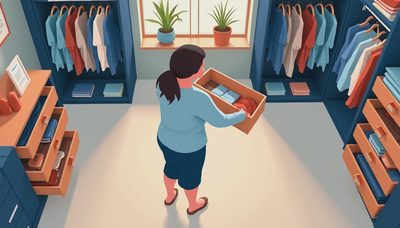
When a client asks me where to start, I tell her to pull out ten pieces and ask a blunt question: would I buy this again today? If the answer is no, but the item is useful, it might need tailoring, better underpinnings, or a different outfit formula. If the answer is no and it already feels tired, donate it or pass it on. The point is not to build a perfect moral record. The point is to stop letting weak pieces take up space.
I also look at repeat behavior. If a blazer has been worn to every presentation for two years, that is a strong sign it deserves a better twin. If a dress has been hanging there since the last wedding, it is probably dead weight. If you want sustainable clothing to be more than a slogan, start with one category and buy better there first. Jeans, sweaters, or shirts are usually the easiest wins. Once those pieces feel solid, the rest of the closet gets simpler, quieter, and cheaper to maintain. Every piece earns its hanger.

No comments yet — be the first to share a thought.