A built in closet can solve a surprisingly specific morning problem: you own clothes you like, but cannot see them, reach them, or assemble an outfit without excavating a pile. I have designed enough wardrobes to know that storage is not just a construction decision. It changes what you wear. A good built in closet makes your working pieces visible, gives delicate garments room to breathe, and stops the floor from becoming an accidental laundry system.
The goal is not to copy a showroom packed with identical cream sweaters. Your closet should support your actual week: school drop-off, a client presentation, grocery shopping, and dinner when you have twenty minutes to change. Before ordering materials, take inventory of your habits. Do you fold denim or hang it? Do you reach for blazers every day, or are they simply taking up prime real estate? Every piece earns its hanger.
Start with measurements, not Pinterest
Measure the room at several points because walls, baseboards, vents, and door trim rarely cooperate perfectly. Record ceiling height, wall width, door swing, outlet locations, and the depth available for storage. Most hanging garments need roughly 24 inches of depth to sit comfortably without sleeves catching on doors. A shallow 14-inch section can work for folded sweaters, handbags, or shoes, but it is a poor substitute for full-depth hanging space.
For a reach-in wardrobe, plan the usable wall in zones rather than assuming every inch needs a shelf. Double-hang sections are useful for blouses, trousers, skirts, and shorter jackets. A long-hang area of about 60 inches accommodates dresses and most coats. If you are planning a built in closet in a narrow bedroom, leave enough clearance to stand in front of drawers without blocking the doorway. A beautiful installation that makes the room awkward is still a bad design.
I also recommend taping the proposed footprint on the floor with painter's tape. Put a laundry basket inside it. Open your bedroom door, walk past the installation, and pretend to pull out a drawer. You will catch problems before they become expensive.
Choose storage around your real clothes
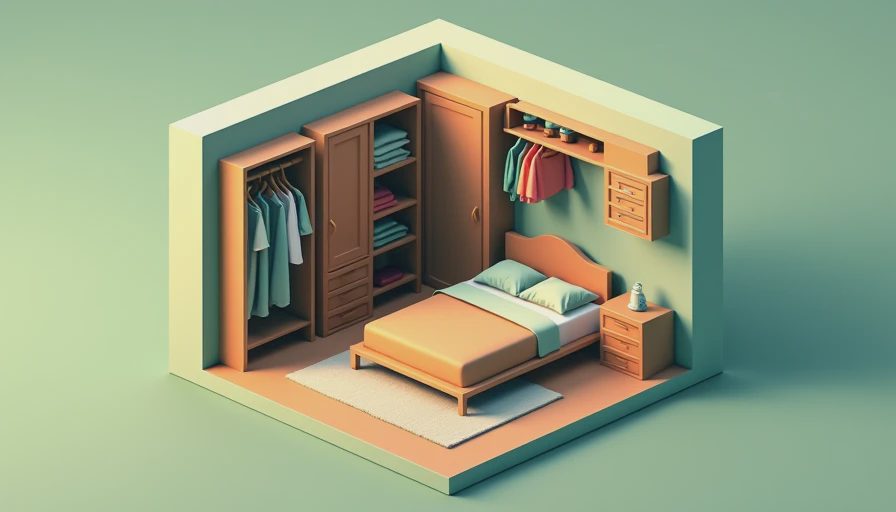
A built in closet should be designed from your wardrobe backward, not from a generic package forward. Count your hanging garments by category, then add a little room for movement. Crowded hangers hide the clothes you paid for and create creases at the shoulders. Slim velvet hangers from brands such as Joy Mangano or The Container Store can save space, but do not force every item onto a narrow hanger. Structured jackets need a broad shoulder shape, while knits often do better folded.
Use adjustable shelves for the pieces that change. My own first closet had fixed shelves spaced for handbags, which sounded sensible until I bought taller boots. The shelves became dead ledges. A built in closet with adjustable pins gives you the option to move a shelf six inches when your wardrobe shifts.
Drawers are worth the cost for underwear, workout clothes, silk camisoles, and accessories. Open shelves are better for sweaters you reach for weekly. A shoe shelf should be easy to clean, especially if it sits near an exterior door. If you wear heels once a year, they do not need the best-accessed section. Put them high and reserve eye-level storage for your Tuesday-to-Friday shoes.
Materials and finishes that hold up
Melamine and laminate systems are practical, easy to wipe down, and often less expensive than painted wood. A quality 3/4-inch board with properly finished edges can serve a closet for years. Look closely at exposed seams and shelf supports; flimsy edge banding is where an inexpensive installation starts to look tired. California Closets, IKEA's PAX system, Elfa, and local millwork shops all occupy different price and customization ranges, so compare the components rather than only the advertised total.
Painted MDF can give a built in closet a furniture-like appearance, especially in a bedroom with traditional trim. It needs careful sealing at edges and should not be treated like solid hardwood. Plywood is strong and useful for heavy shelves, but the visible edge needs a finish you can live with. For color, I prefer a quiet warm white, soft gray, or muted blue over a high-contrast trend shade. The clothes already provide enough visual activity.
Hardware changes the experience more than many people expect. A full-extension drawer glide feels dramatically better than a shallow track. Brushed nickel and aged brass are both dependable choices; a small round knob is easier to replace than an unusual sculptural pull.
Add lighting and visibility
The best built in closet is not useful if the back wall disappears in shadow. If possible, plan a ceiling fixture plus targeted lighting inside or beneath shelves. Motion-activated LED strips can help in a reach-in closet, while recessed puck lights work well on open shelving. Use a warm-neutral color temperature so navy does not look black and cream does not look gray. An electrician should handle hardwired connections, particularly in an older house.
Mirrors also deserve planning. A full-length mirror on the closet door saves wall space, but a hinged door can become heavy and awkward. A slim leaning mirror may be easier to move, though it needs a secure position in a busy bedroom. I like a mirror where the floor is visible from several feet away; that lets you judge the proportion of shoes, trousers, and a jacket together instead of inspecting only your neckline.
Visibility means leaving breathing room. Do not fill every shelf on installation day. A little empty space makes it easier to return clothing neatly and see what needs laundering or repair. The point is not to display abundance. It is to make dressing a clear sequence instead of a daily negotiation.
Budget the project without losing the useful parts
A modest reach-in update using a stock system can land around $500 to $2,000, depending on width, drawers, accessories, and installation. Semi-custom work commonly rises into the $2,000 to $6,000 range, while fully custom millwork can go higher. Those figures are planning ranges, not quotes, but they help separate a needed upgrade from a fantasy renovation.
If money is tight, spend first on sturdy vertical panels, adjustable shelving, and good hanging rods. Add decorative doors later. A built in closet does not need glass fronts to work well. Drawers are valuable, but you can start with two deep units instead of trying to build a drawer for every category. Save the expensive finish for the areas you touch daily.
Get an itemized estimate that separates materials, demolition, electrical work, painting, delivery, and installation. Ask what happens if a wall is out of square. A vague low bid can become costly when trim, patching, or an outlet relocation appears at the end.
Make the layout support your mornings
Group clothing by the way you dress, not only by garment type. Keep a blazer near the trousers you wear with it. Put school-run layers close to the door. Store occasion pieces away from the daily zone so a satin dress is not competing with your black cardigan every morning. A built in closet should reduce decisions, not create a museum of clothes you are afraid to disturb.
Use one shelf for bags that are currently in rotation and one hook for tomorrow's outfit. Put a small tray inside a drawer for earrings, watch bands, or spare buttons. Keep a fabric shaver, stain stick, and lint roller nearby; maintenance tools are useful only when they are visible enough to reach.
After installation, live with the arrangement for two weeks before making final judgments. Notice which drawer you open first, where clothes collect, and which rod remains untouched. Move the system around when possible. The most successful built in closet is not the one that photographs best. It is the one that makes a Monday morning feel ten minutes less frantic.
A thoughtful design can make a smaller wardrobe feel larger because every item has a place and a reason to be there. Measure carefully, invest in the parts your hands use, and leave room for real life. Then the built in closet becomes what it should have been all along: quiet infrastructure for getting dressed well.


No comments yet — be the first to share a thought.