A wardrobe armoire can be the difference between getting dressed in six minutes and excavating a chair-sized pile of clothes before school drop-off. I have lived with both outcomes. The right wardrobe armoire gives dresses, jackets, folded knits, and the occasional impractical-but-beloved blouse a proper home without requiring a walk-in closet. The wrong one becomes an expensive wooden box with a door that catches on every hanger.
When I assess one, I look at it as I would a garment: proportion, construction, function, and the way it will age. A beautiful finish is not enough. Every piece earns its hanger, and every storage piece has to earn its floor space.
Start with the clothes, not the room
Before shopping, measure the clothes you actually wear. A client who works in finance might need room for 12 jackets, several trousers, and longer dresses. Someone working from home may need more shelves for knitwear and denim than a long hanging section. The wardrobe armoire should reflect that reality rather than an imaginary lifestyle built around silk gowns.
Measure the available wall, then leave at least 30 inches in front for the doors to open comfortably. Sliding doors help in a narrow bedroom, while hinged doors give you a clearer view of the interior. Check ceiling height, baseboard depth, and whether the piece has to pass through a stairwell or tight hallway. A 48-inch-wide unit can look modest online and surprisingly monumental beside a queen bed.
For most bedrooms, a wardrobe armoire between 36 and 60 inches wide is useful. Look for at least 20 inches of interior depth so hangers sit without forcing sleeves against the doors. If you own long coats or maxi dresses, measure from the rod to the floor instead of trusting a product description.
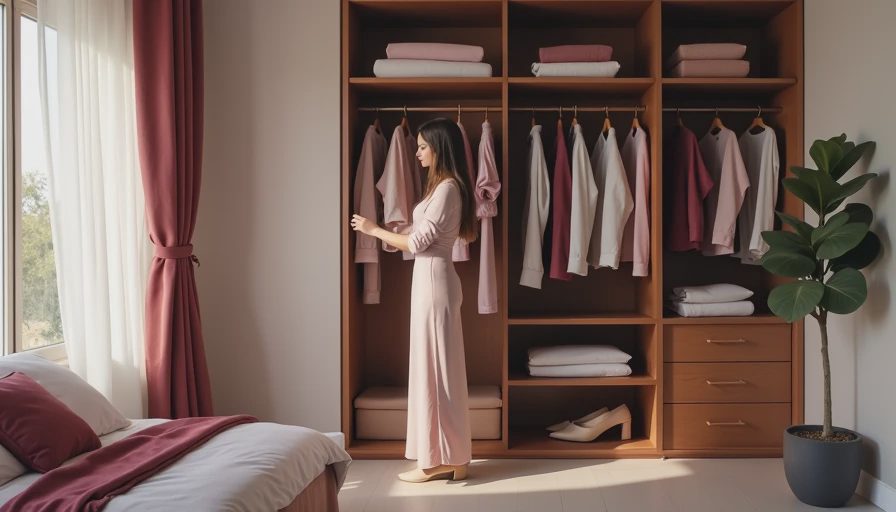
What construction details matter
Solid wood is attractive, but a well-built combination of hardwood frames and veneered engineered panels can be more stable and less expensive. I would rather buy a sturdy oak veneer wardrobe armoire with a smooth back and dependable hardware than a flashy solid-pine piece with doors that sag. Veneer is not automatically a compromise; poor joinery is.
Open and close every door if you can see the piece in person. The movement should be quiet and even. Look for concealed soft-close hinges, metal shelf pins, and a hanging rod that feels firmly attached at both ends. A thin, removable rod may work for blouses but can bow under wool coats. For a household with children, wall anchoring is essential. Tall storage furniture should be secured according to the manufacturer's instructions, not balanced hopefully against a wall.
Inspect the back panel, too. A thin cardboard back can collect dust and make the whole piece rack over time. A properly fitted back, finished edges, and a level base tell you more about quality than a distressed paint effect ever will.
Choose an interior that supports real dressing
A wardrobe armoire needs a useful division of space. One long hanging bay handles dresses, coats, and jumpsuits. A second bay with two rods doubles capacity for shirts and skirts, but only if you will actually maintain that arrangement. Adjustable shelves are more valuable than a fixed grid because sweaters change thickness throughout the year.
I like a layout with one long section, two or three adjustable shelves, and a pair of drawers for belts, tights, or small accessories. Deep shelves look generous but often become fabric caves. Twelve to 16 inches of shelf depth is easier to scan. Drawers should extend far enough to see the back and glide without scraping.
Be honest about folded clothing. If your merino sweaters are stacked five high, you need wider shelves or fewer sweaters, not a taller pile. Cedar inserts can help with odor, but they do not replace clean, dry storage. Avoid packing clothes tightly enough that you have to pull one item out and disturb everything around it.
Style it so it belongs in the room
The best wardrobe armoire does not have to match your bedroom suite. In fact, a mismatched piece often feels more considered than a complete set purchased in one afternoon. A walnut-toned armoire can sit comfortably beside painted nightstands, while a soft white finish works with oak floors and linen bedding. Pay attention to undertones: yellow pine beside cool gray furniture usually looks accidental.
For a traditional room, look at raised panels, turned feet, or antique brass pulls. For a smaller apartment, a simple flat-front unit in a medium wood tone creates less visual noise. Brands such as IKEA offer practical modular choices at approachable prices, while Crate and Barrel, West Elm, and California Closets tend to provide more polished finishes or customization at a higher cost. Vintage solid-wood pieces can be excellent, but inspect for musty odors, warped doors, and damaged veneer before bringing one home.
Color matters less than scale. A tall, narrow piece can emphasize ceiling height, while a broad low unit may make a bedroom feel calmer. Leave breathing room around it when possible; furniture jammed into every inch of wall loses its presence.
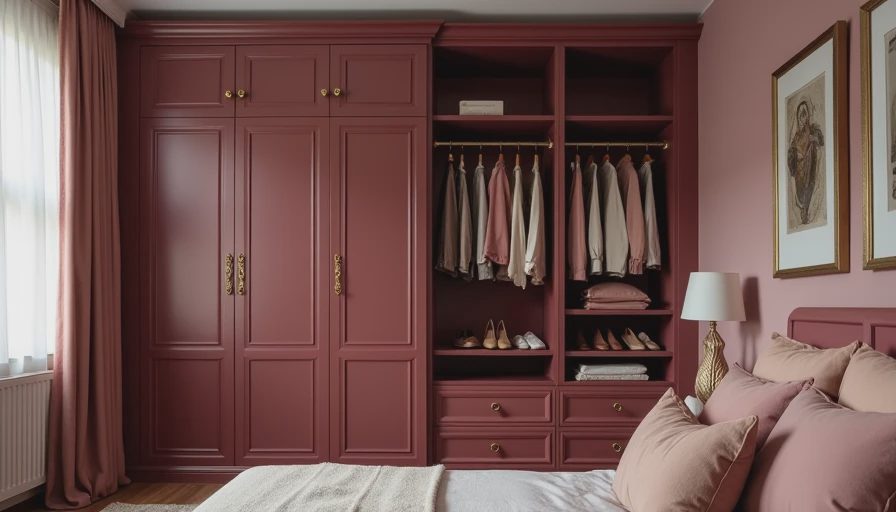
Organize it for the week you actually have
A wardrobe armoire works best when the most-used clothes are easiest to reach. Put work jackets and everyday trousers at eye level. Place occasionwear higher or farther to the side. Keep a small tray for watches, hair accessories, and earrings so those pieces do not migrate to the dresser, bathroom counter, and car console.
Use slim flocked hangers for blouses and knits, but do not force every garment onto a narrow hanger. Structured jackets need a broader shoulder shape, and heavy sweaters are better folded to prevent distortion. Group clothes by category first, then by color if that helps you make outfits quickly. I prefer jackets, shirts, skirts, trousers, and dresses because it answers the morning question faster than a perfect rainbow.
Leave about an inch between densely worn garments. That gap lets you see what you own and makes laundry day less punishing. A wardrobe armoire should reduce friction, not become another system you resent maintaining.
The cost and the final test
Budget around $250 to $600 for a basic flat-pack unit, $700 to $1,500 for a sturdier ready-made wardrobe armoire, and considerably more for custom cabinetry or a well-restored vintage piece. The useful comparison is not price alone. A $350 unit that lasts three moves can be smarter than a $200 piece with failing hinges after one year.
Before buying, tape the proposed dimensions on the floor. Hang a jacket and dress from a broom handle at the intended height. Open the doors, walk around them, and imagine putting away laundry while a child asks for help finding a swim bag. If the clearance already feels irritating, it will not improve after delivery.
Finally, ask whether the piece solves your actual storage problem. If you need more hanging room, prioritize rod length. If your closet is full of folded clothes, prioritize shelves and drawers. If the bedroom needs visual calm, choose quiet fronts and fewer exposed objects. A well-chosen wardrobe armoire should make your clothes easier to see, easier to combine, and easier to put away. That is not glamorous, but it is the kind of design that keeps working five years from now.




No comments yet — be the first to share a thought.