A diy closet is not a punishment exercise where you reduce your clothes to twelve beige items and call it personal style. It is a practical edit: a wardrobe shaped around your actual mornings, your budget, and the proportions you enjoy wearing. I learned this after seven years designing women's clothing at J.Crew. The right question is not “How little can I own?” It is “Can I find something that works in five minutes?”
Start with your real week
Before pulling everything off the hanger, write down the places your clothes need to go. School drop-off, a client presentation, a grocery run, dinner with friends, a weekend walk, and the occasional wedding require different levels of polish. A diy closet works when it reflects those categories instead of an imaginary life built around linen trousers and quiet mornings.
Take a quick inventory of your last fourteen days. What did you reach for repeatedly? What stayed untouched? Put those answers on paper before your preferences get confused with guilt. If you wore the same navy knit jacket four times, that is useful information. If the silk blouse still has its tags after eighteen months, it is also useful information.
Now make three groups: working, uncertain, and not working. Working pieces fit your current body and schedule. Uncertain pieces need a real try-on, not a hopeful glance. Not working pieces might be damaged, uncomfortable, impossible to style, or connected to a former version of your life. None of that makes you irresponsible. It just means the garment has stopped earning its hanger.
Check fit before color
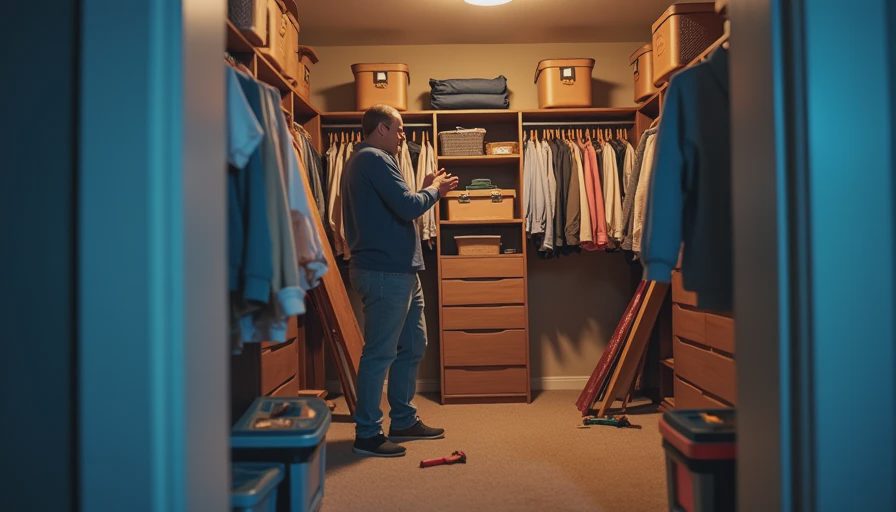
The most expensive-looking wardrobe is usually not the one with the highest price tags. It is the one where shoulder seams sit correctly, waistbands do not twist, and sleeves end at a deliberate point. In a diy closet, fit comes before color because proportion determines whether a piece can work with the rest of the room.
Try on a jacket over the shirt you actually wear underneath it. Check whether the shoulder seam lands near the edge of your shoulder, whether the lapel lies flat, and whether you can drive or type without pulling across the back. For knitwear, look at the recovery: stretch the cuff gently and see whether it springs back. A cotton-modal blend can feel soft and wearable, while a loose acrylic knit may pill quickly under a crossbody strap.
Pants deserve an honest test. Sit down, walk upstairs, and place your phone in the pocket. A pair of $35 jeans that passes those tests can be more valuable than $220 denim that requires constant adjustment. I once kept a beautiful ivory trouser in my own closet for two years because I loved the fabric. It wrinkled at the knee, showed every mark, and worked with almost none of my shoes. The fabric was lovely; the garment was wrong for my life.
Build around dependable anchors
A useful diy closet needs anchors, not a long list of isolated favorites. Start with two bottoms, three tops, one layer, and two pairs of shoes that already cooperate. For many women, that could mean dark straight-leg jeans, black ankle pants, a white or blue cotton shirt, a merino crewneck, a washable knit top, an unstructured blazer, leather loafers, and clean sneakers.
The exact colors are yours. Navy can replace black. Olive can be more useful than camel. The point is connection. Put every proposed purchase beside at least three items you own. If the new cardigan only works with one skirt and one special bra, it is not an anchor; it is a styling assignment.
Look at fabric behavior, too. A 100 percent cotton shirt may crease more than a cotton-polyester blend, but it can feel better after repeated washing. A merino sweater from Uniqlo can fill a different role from a heavier J.Crew wool knit. A ponte pant from Spanx or Athleta offers structure for travel, while lightweight linen belongs in a different part of the week. Good editing does not make every item identical. It gives each fabric a clear job.
Create outfit formulas, not uniforms
A diy closet becomes easier when you name a few formulas. Try straight jeans, a fine-gauge sweater, a blazer, and loafers for school pickup followed by a meeting. Try wide-leg trousers, a fitted knit, and low-profile sneakers for a museum afternoon. Try a slip skirt, a substantial cotton tee, and a cropped jacket for dinner. These are starting points, not rules.
Photograph the combinations that work. Use your phone, stand in ordinary light, and include the shoes. A top that looks balanced in a mirror can feel too short once you add flat boots. A jacket that looks polished with trousers may overwhelm a full skirt. The camera gives you distance from the garment and helps you notice proportion rather than focusing on one body area.
If an outfit is almost right, change one variable. Roll the sleeve, tuck only the front of the shirt, swap a delicate shoe for a loafer, or add a belt with enough weight to match the fabric. Avoid buying a new item to solve every styling problem. Most closets need a better sequence of decisions, not more inventory.
Shop with a repair plan
The best diy closet shopping rule I know is to delay the purchase until you can describe its first three outfits. “I love the color” is not a plan. “I will wear it with navy pants, faded jeans, and the gray skirt” is a plan. If you cannot make those connections, save the money for alterations or a genuinely missing category.
Set a practical replacement budget. A hem can cost roughly $15 to $30, while taking in a jacket or adjusting a waistband may run $30 to $80 depending on the garment and tailor. Those numbers are not wasted spending when they turn an almost-right piece into something you wear weekly. Conversely, a $90 dress that needs extensive work may not deserve another $60.
Inspect seams, buttons, and care labels in the fitting room. Uneven topstitching, thin fabric at stress points, and a lining that pulls are warnings. That does not mean every inexpensive garment fails, or every designer label succeeds. It means you are buying construction instead of a mood created by lighting and a beautifully styled rack.
Maintain the edit without obsession
A diy closet should save time, not become another project that demands constant attention. At the end of each season, make a short note about what annoyed you. Maybe your only rain shoes slipped on wet sidewalks, your work pants lacked pockets, or every sweater felt too warm for your overheated office. Those notes create a useful shopping list.
Use slim matching hangers if they help you see the clothes, but do not buy expensive organizers before editing. A simple shelf, a shoe rack, and one basket for accessories can handle most wardrobes. Store special-occasion pieces separately so they do not compete with daily options. Keep a small repair kit nearby: matching thread, a needle, safety pins, and a fabric shaver can extend the useful life of a sweater or skirt.
Every few months, repeat the three-outfit test on new purchases. If something has not left the house, ask what obstacle is stopping you. It might need a different bra, a hem, or a more substantial shoe. If the answer is that you do not like wearing it, believe that answer. Style is not a morality test, and a closet is not a museum of good intentions.
The best diy closet is specific, forgiving, and easy to use on a rushed morning. It includes the $25 tee that works under a blazer, the repaired jeans you reach for on Saturday, and the dress that lets you leave for dinner without trying on six alternatives. Keep the pieces that support your real calendar, improve the proportions of an outfit, and make getting dressed less noisy. Every piece earns its hanger.



No comments yet — be the first to share a thought.