When you search for closet systems near me, you are probably not looking for another pretty photo of white shelves. You want to open the door at 7:15 a.m., see your work clothes, jeans, jackets, and shoes, and make a decision without excavating the whole room. That is a storage problem, but it is also a wardrobe problem. The right system makes the clothes you already own visible, reachable, and easier to wear.
I learned this the hard way in my own 1920s house. A single wire shelf ran around the primary closet, with one sad rod and a floor full of shoes. It held plenty, technically. It worked for nothing. Sweaters collapsed, trousers dragged, and the blouse I needed for a client presentation disappeared behind a canvas tote. Every piece earns its hanger, but first, every hanger needs a sensible address.
Start with your clothes, not the showroom
Before visiting a closet company or measuring for a modular kit, pull out what you actually use during an ordinary month. Separate hanging dresses, jackets, blouses, trousers, folded knits, shoes, bags, and accessories. Do not design around an imaginary life in which you attend six black-tie events and wear linen pajamas at home. Design around school drop-off, a Tuesday client call, grocery shopping, and dinner with friends.
Closet systems near me often look interchangeable online, but the interior details matter. If you own many dresses and long coats, you need a tall hanging section. If your wardrobe is mostly knitwear, adjustable shelves are more useful than a second row of short rods. Denim can live on shelves, while silk blouses need enough breathing room that sleeves are not crushed against neighboring garments.
Count your shoes, too. A shelf that fits eight pairs of low-profile flats may hold only four ankle boots. Measure handbags at their widest point, including handles. This small inventory prevents the classic mistake: spending $1,500 on a system that stores folded shirts beautifully but leaves every boot in a heap by the door.

Custom, modular, or a smart combination?
Custom closet systems near me usually involve a local designer who measures the space, creates a plan, and installs cabinetry or melamine components. Companies such as California Closets and The Container Store’s Elfa line occupy different points in that market, while independent carpenters may build a more furniture-like installation. A custom project can run from roughly $2,000 for a modest reach-in to $8,000 or more for a large walk-in with drawers, lighting, and upgraded finishes.
The value is not simply the polished finish. Custom work can use awkward corners, sloped ceilings, shallow walls, and narrow returns that off-the-shelf pieces ignore. In an older Richmond home, for example, a six-inch difference in wall depth can decide whether a drawer opens fully or bumps the opposite shelf.
Modular systems cost less and offer flexibility. IKEA’s BOAXEL, Elfa, and similar products can often outfit a reach-in closet for several hundred dollars to around $2,000, depending on drawers, baskets, and installation. They are practical if you rent, expect to move, or want to change the layout as your wardrobe changes. The tradeoff is that you will do more planning, and the finished look may be less seamless.
A hybrid is often the sensible choice. Use a professional installation for the main structure, then add a freestanding dresser, valet hook, or shoe cabinet. You do not need a built-in jewelry drawer just because a showroom has one.
What to measure before you request a quote
Take measurements in three places: near the floor, at waist height, and near the ceiling. Walls are not always perfectly straight. Record the closet’s total width, depth, ceiling height, door opening, trim width, outlet locations, and the swing path of the door. Photograph the corners and mark obstructions such as baseboard heaters or attic access panels.
For hanging clothes, allow about 24 inches of depth so garments sit without pressing against the door. Double-hang sections need enough vertical room for the categories you own; shirts and skirts usually need less than dresses and long coats. Drawers require clearance to open, especially in a narrow reach-in. If the closet is only 5 feet wide, a bank of deep drawers may consume the walking space you need to turn around.
When comparing closet systems near me, ask whether measuring, delivery, removal of the old system, and installation are included. Get the material specification in writing. “White finish” can mean durable laminate, painted fiberboard, or a thin coating that shows every chip. Ask about drawer weight limits, hardware, warranty coverage, and what happens if a component arrives damaged.
Make the layout earn its footprint
Put the clothes you wear most between shoulder and eye level. That means your everyday blouses, jackets, and trousers should not live on the highest shelf. Reserve upper storage for luggage, formalwear, seasonal accessories, or the dress you wear once a year. A step stool is useful; requiring one every morning is not.
Use drawers for small categories that otherwise become visual noise: underwear, workout layers, belts, and scarves. Open shelves work well for sweaters when you can stack only two or three high. Taller stacks look tidy for a week and then become the fabric equivalent of a landslide. For handbags, a single shelf with dividers is usually more functional than individual cubbies sized for one specific bag.
Lighting deserves attention. A ceiling fixture often throws your body’s shadow across the clothes. Battery-powered motion lights are an inexpensive improvement for a rental, while hardwired LED strips create a cleaner result in a permanent installation. Choose a neutral light that lets you distinguish navy from black before you leave the house.
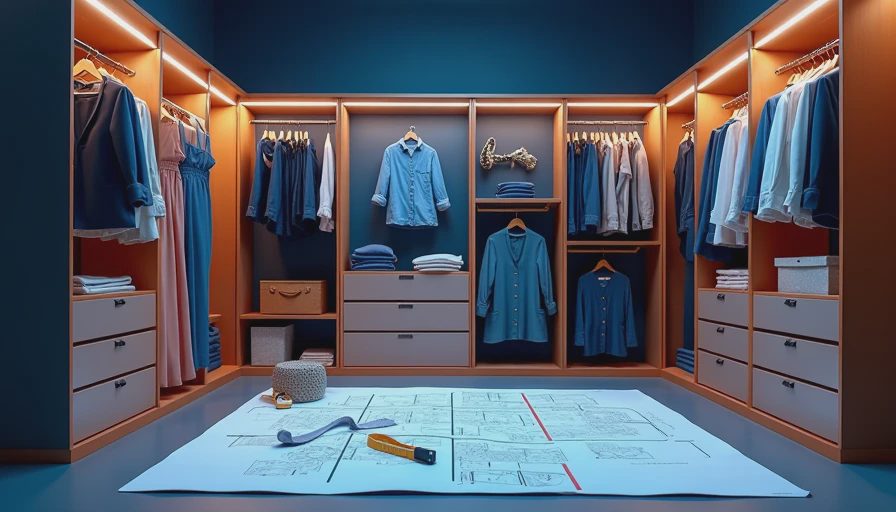
Questions to ask local closet designers
Ask how the designer handles changes after the home visit. Some companies offer a free consultation but charge for revisions or installation; others roll those services into the proposal. Ask to see material samples in daylight, not only under a bright showroom display. Run your hand along shelf edges and drawer fronts. Rough edges, rattling hardware, or a drawer that does not close squarely are not charming details you should accept in a new installation.
Closet systems near me should also be judged by the installer, not just the rendering. Confirm the installation date, wall-anchoring method, cleanup policy, and whether the team will remove packaging. If the system attaches to drywall, ask whether studs will be used where possible. Heavy shelves and drawers need proper support, especially when loaded with shoes, denim, or folded wool.
Bring a realistic budget. A simple reach-in refresh might include shelves, two hanging levels, and a few baskets for $500 to $1,500. More drawers, upgraded materials, and professional labor can move the total to $3,000 or beyond. Spend first on structure and adjustability; decorative doors and specialty inserts can wait.
The closet test I use before approving a plan
I imagine getting dressed for three specific days. First, a rushed school morning: can I reach jeans, a knit top, and a jacket without opening six drawers? Second, a client presentation: can I see my work dresses and shoes together? Third, a warm-weather dinner: can I find a dress, small bag, and sandals without pulling down winter coats?
If the answer is no, the layout is not finished. I also check whether the system leaves a useful place for laundry, empty hangers, and the clothes waiting for repair. Real closets need those transitional zones. A beautiful plan that ignores them simply moves the mess to a chair.
The best closet systems near me are not necessarily the most expensive or the most dramatic. They are the ones that match the shape of the room and the rhythm of your life. Get two or three detailed quotes, compare the actual components, and make the designer solve your difficult corner instead of disguising it in a glossy rendering. Then edit the wardrobe to fit the system, too. Keep the pieces you reach for, the garments that make sense for your days, and the things that deserve care. Every piece earns its hanger.




No comments yet — be the first to share a thought.