A wardrobe cabinet is not just a large box for clothes. It is the piece that decides whether your bedroom feels composed or whether every morning begins with a negotiation between a chair, a laundry basket, and three half-worn sweaters. I have designed enough clothing to know that storage changes how you dress. When the right pieces are visible, you reach for them. When they are crushed behind a sticking door, even a good cashmere cardigan disappears from your life.
The best choice depends on your room, your clothing habits, and the details you actually own. A person with twelve dresses needs different interior space from someone whose wardrobe is mostly denim, knitwear, and work jackets. Before looking at finishes, measure honestly and notice where your current system fails.
Start With the Clothing, Not the Cabinet
Measure the wall, but begin by taking inventory. Hang your longest dresses, coats, and trousers on a rod, then measure the vertical space they need. Most everyday shirts and jackets fit comfortably in a hanging section around 36 inches wide, while long garments need roughly 60 inches of clear height. A wardrobe cabinet with one narrow rod and four shallow shelves can look practical online and become useless by Monday morning.
Think in zones. Hanging space protects linen trousers, blazers, and bias-cut dresses from hard creases. Adjustable shelves handle folded sweaters, jeans, handbags, and shoes. Drawers are useful for underwear, belts, and silk scarves because small items vanish quickly on open shelving. If you own several wool coats, prioritize a deep, sturdy hanging section over tiny cubbies.
I once bought a beautiful painted cabinet for my own guest room because the scalloped trim was irresistible. The rod sat too low for my midi dresses, and the shelves were too deep for folded knits. It looked charming and earned almost none of its space. Every piece earns its hanger, and furniture has to earn its footprint too.

What Makes a Wardrobe Cabinet Feel Well Made
The outside tells only half the story. Open the doors and inspect the edges, hinges, back panel, and hardware. A solid wood frame is reassuring, but a well-constructed combination of hardwood, plywood, and quality veneer can be more stable and less expensive. Thin particleboard is not automatically a disaster; it becomes a problem when the cabinet carries heavy coats and the shelf pins are loose.
Look for doors that sit evenly when closed. Soft-close hinges are a small luxury that prevents the daily slam, especially in a bedroom shared with a sleeping child. Full-extension drawer slides let you see the back of a drawer without kneeling on the floor. A back panel attached securely to the cabinet helps prevent wobble, while adjustable feet are useful on the uneven floors found in older homes.
Brands such as IKEA, West Elm, and Pottery Barn approach this category differently. IKEA often offers modular interiors and accessible pricing, but assembly and anchoring matter. West Elm tends to emphasize design-forward finishes and cleaner silhouettes. Pottery Barn generally offers a more traditional look with heavier visual weight. None is automatically right; the useful question is whether the construction matches what you will store.
Choose the Right Size for the Room
A wardrobe cabinet can overwhelm a small bedroom even when its measurements technically fit. Leave enough clearance for doors and drawers to open fully, and keep a walking path wide enough to carry a laundry basket without turning sideways. In a narrow room, sliding doors can save floor space, though they limit access to half the interior at a time. Hinged doors give a better view of the contents but need clear swing space.
For a rental apartment, a freestanding wardrobe cabinet is usually more flexible than a built-in. Choose one that can move with you and anchor it to a wall stud or approved wall hardware, especially if children are present. In a primary bedroom, two narrower units may work better than one enormous piece because they can frame a window or be separated when the room layout changes.
Color matters, but proportion matters first. A warm oak finish can make a room feel grounded; white or pale gray keeps a bulky cabinet visually quieter. I would rather see a plain cabinet with doors aligned to the baseboards than an ornate piece that blocks a radiator. Furniture should support the room, not perform over it.
Build an Interior That Supports Real Dressing
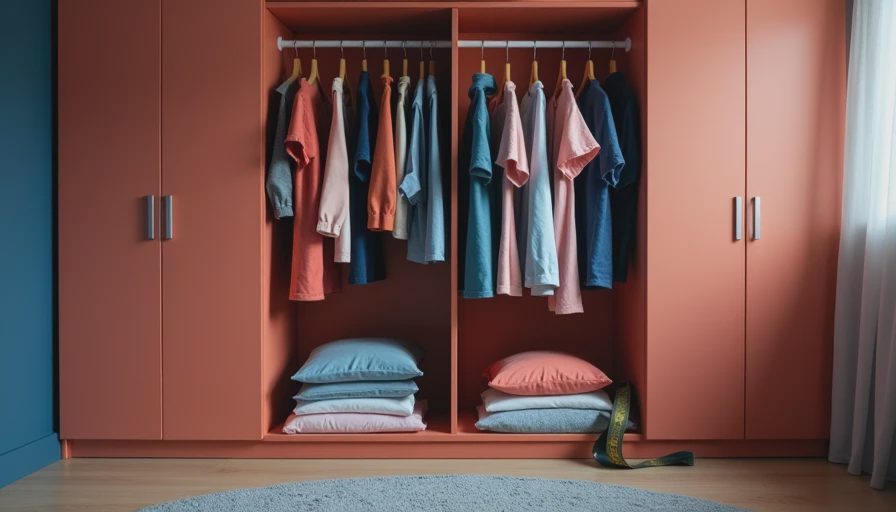
The most expensive wardrobe cabinet will not fix an interior arranged around fantasy clothing. Put daily workwear at eye level. Store occasional dresses higher up, and use lower drawers for items you reach for before school drop-off or a morning commute. If you wear jeans four days a week, give them a dedicated shelf rather than burying them beneath formal trousers.
A single full-width shelf can be surprisingly awkward. Two shorter adjustable shelves often let you separate knitwear by weight and reduce the leaning tower effect. Keep folded stacks under about eight inches high so the bottom items remain accessible. For shoes, ventilation matters more than decorative compartments. Leave enough space for ankle boots, and do not force leather footwear into a shelf designed for ballet flats.
Use slim velvet hangers for slippery silk and broad wooden hangers for jackets, but do not pack the rod tightly. Clothes need enough room for air and for your hand to remove one item without pulling five others forward. If an interior light is available, choose one that turns on when the doors open; otherwise, a small rechargeable motion-sensor light can make dark corners useful.
Compare Cost Before You Buy
A budget wardrobe cabinet may cost $250 to $600, while a larger solid-wood or custom-style piece can run from $1,000 to $3,500 or more. The price difference is not only about appearance. It can reflect stronger shelves, better hardware, delivery, assembly, and a finish that can be repaired instead of discarded after one move.
At the lower end, prioritize a stable frame, wall anchoring, and an interior you can adjust. Skip decorative molding if it means losing hanging height. Around the midrange, pay attention to drawer construction and whether replacement hardware is available. At the higher end, ask for finish samples in daylight and confirm the delivery path, door width, stair turns, and return policy before ordering.
A $400 cabinet that holds your actual clothing can be a better purchase than a $1,800 statement piece that forces half your wardrobe into plastic bins. Conversely, replacing a flimsy unit every three years is not a bargain. Consider the cost per year and the friction it removes from your mornings.
A Five-Minute Final Check
Before buying a wardrobe cabinet, write down the maximum width, depth, and height your room allows. Add door clearance and measure the route from the front door to the bedroom. Count your long garments, folded stacks, shoes, bags, and drawers of small accessories. Compare those needs with the listed interior dimensions, not the product photograph.
Check whether assembly is included, whether the cabinet must be anchored, and whether the shelves can move. Read reviews for recurring complaints about warped doors, missing hardware, odor, or difficult delivery rather than focusing only on the star rating. If you are ordering online, save the measurements and finish description with your receipt.
Then picture a real Tuesday. You are dressing for a client presentation, your child cannot find a swim towel, and you have eight minutes before leaving. Can you see the blazer, reach the trousers, and close the doors without wrestling the frame? If yes, you have chosen storage that supports your life. If not, keep measuring. A wardrobe cabinet should make getting dressed simpler, not turn your closet into another project.



No comments yet — be the first to share a thought.